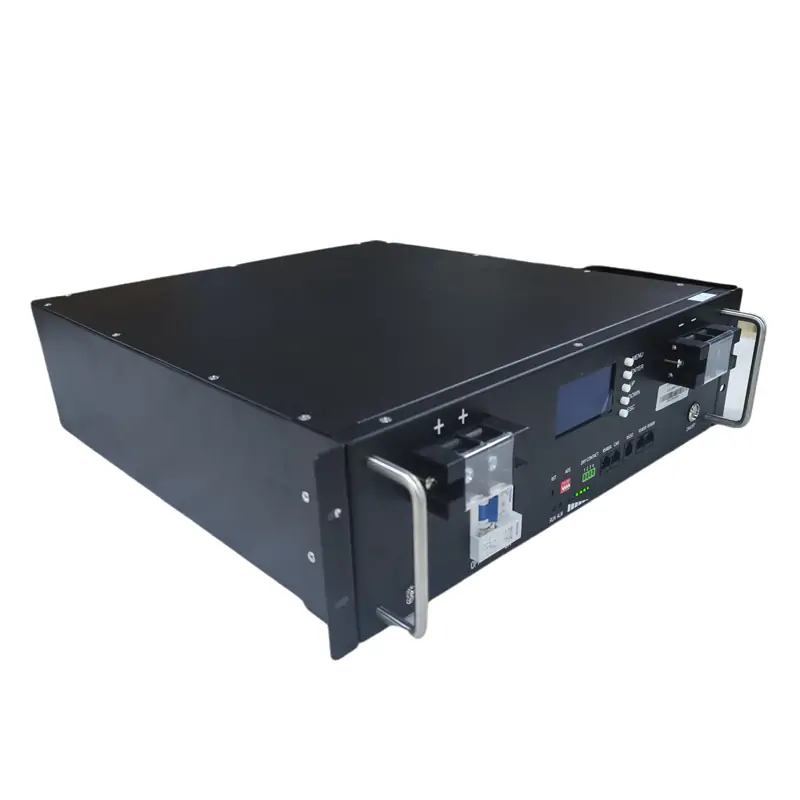
Outdoor solar lights have become a popular choice for illuminating gardens, pathways, driveways, parks, and commercial landscapes. Powered by sunlight, they are energy-efficient, environmentally friendly, and easy to install. As one of the key components in a solar lighting system, the battery has a significant impact on the overall performance and user experience.
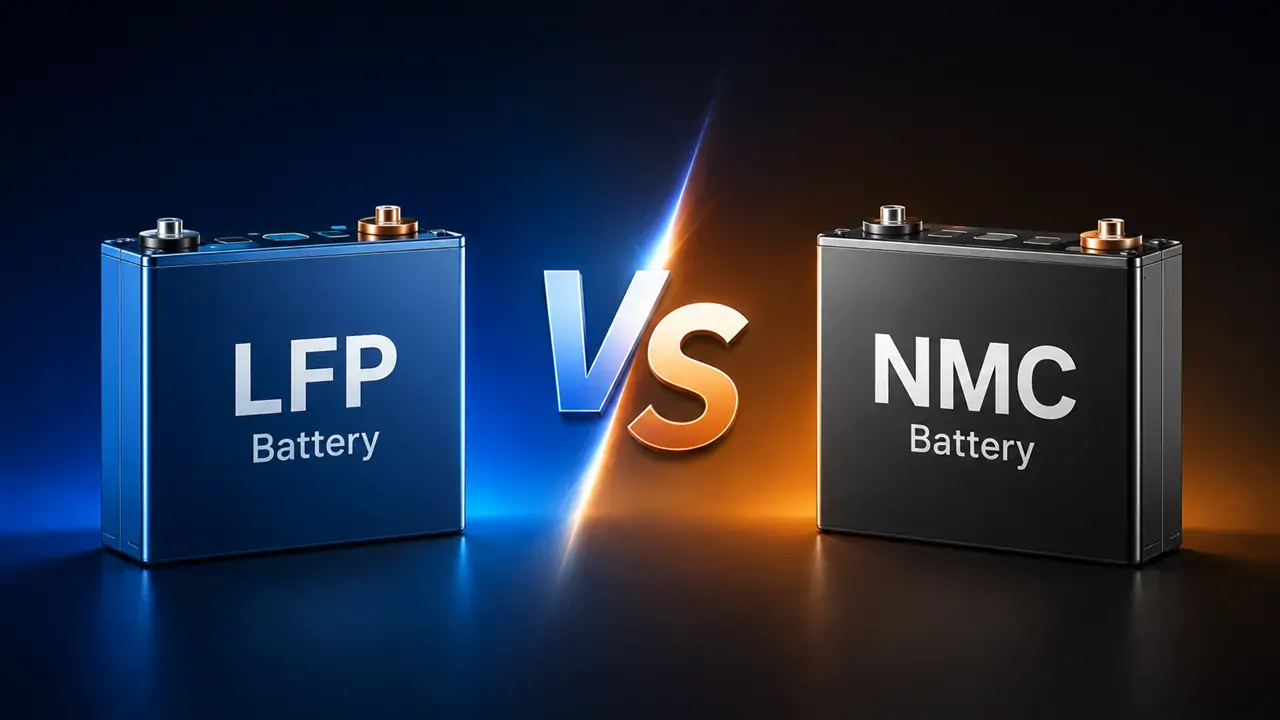
Today, the most common types of batteries used in solar lights include Nickel-Metal Hydride (NiMH), Lithium-ion (Li-ion), Lithium Iron Phosphate (LiFePO₄), and Nickel-Cadmium (NiCd). Each battery chemistry has its own advantages, limitations, and ideal applications. We believe there is no one-size-fits-all battery for every solar light. The right choice depends on multiple factors, including the product design, power requirements, application, and operating environment.
In this article, we’ll explore the different types of solar light batteries, share practical recommendations, and help you make informed decisions when designing, purchasing, or replacing batteries for solar lights.
What are Solar Batteries for Solar Lights?
A solar battery is a rechargeable battery that stores the electricity generated by a solar panel during the day and releases that stored energy to power LED lights after sunset. Unlike disposable batteries, solar batteries are specifically designed for repeated charge and discharge cycles—typically every day throughout their service life. This makes them one of the hardest-working components in a solar lighting system.
When using solar lights, the solar batteries affect their runtime, brightness stability, charging efficiency, lifespan, operational reliability in different environments, and maintenance costs.
Types of Solar Batteries
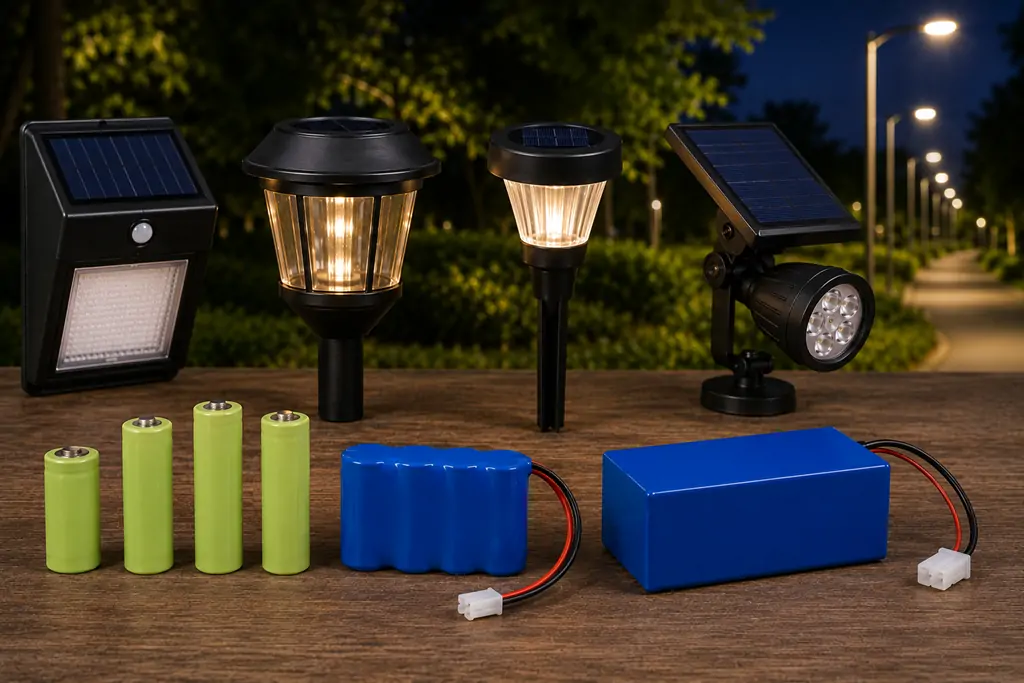
Today, four main types of rechargeable batteries are commonly used in solar lights. Each battery chemistry is designed to meet different performance requirements.
1. NiMH Batteries
NiMH batteries are the most widely used rechargeable batteries in residential solar garden lights. They offer an excellent balance of safety, reliability, affordability, and compatibility. Their key advantages include:
A. Excellent Compatibility
Most residential solar garden lights are designed around NiMH batteries. Their charging circuits, voltage regulators, and LED drivers are specifically optimized for this battery chemistry. Replacing a NiMH battery with a different battery type often results in charging failure or unstable performance.
Using a replacement NiMH battery with the same specifications ensures maximum compatibility and reliable operation.
B. Stable Voltage Output and Reliable Performance
NiMH batteries provide stable voltage, excellent safety, and dependable daily charge and discharge performance.
C. Easy Replacement
Most NiMH batteries come in standard AA or AAA sizes, making replacement quick and convenient.
D. Environmentally Friendly
Compared with NiCd batteries, NiMH batteries are more environmentally friendly and generally face fewer transportation restrictions than lithium batteries.
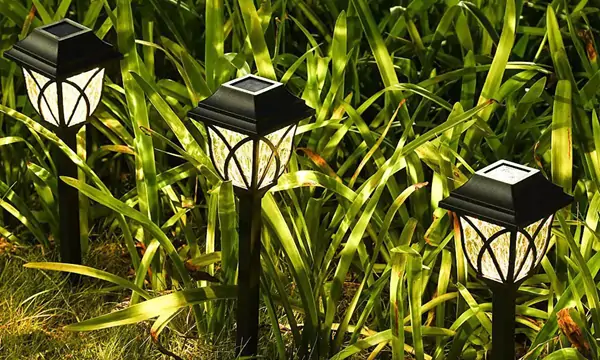
NiMH batteries are particularly suitable for solar walkway lights, solar garden lights, small decorative solar lanterns, solar fence lights, landscape lighting, and solar lawn lights.
2. Lithium-ion Batteries
Unlike NiMH batteries, lithium-ion batteries offer significantly higher energy density, meaning they can store more energy within the same physical size. This allows manufacturers to design brighter solar lights while keeping products compact.
Lithium-ion batteries have advantages such as high energy density, lightweight design, longer runtime, suitability for high-power LEDs, and support for fast charging.
Lithium-ion batteries are commonly used in solar-powered security lights, solar floodlights, motion-sensor lights, portable solar lighting equipment, high-brightness landscape lighting, and solar wall lights.
3. LiFePO₄ Batteries
LiFePO₄ batteries are a type of lithium battery. Although their energy density is slightly lower than that of conventional lithium-ion batteries, they offer superior safety and a much longer service life. As a result, they are increasingly used in commercial solar lighting applications.
Compared to traditional lithium-ion batteries, lithium iron phosphate (LiFePO₄) batteries have advantages such as longer cycle life, higher safety, better stability, and lower risk of thermal runaway.
LiFePO₄ batteries are commonly used in solar streetlights, parking lot lighting, commercial solar lighting, municipal lighting projects, and industrial solar lighting systems.
4. NiCd Batteries
NiCd batteries were widely used in early generations of solar lights because of their reliable charging performance and good low-temperature characteristics. However, with stricter environmental regulations and advancements in battery technology, they have gradually been replaced by NiMH batteries.
NiCd batteries offer advantages such as good low-temperature performance, resistance to repeated charge-discharge cycles, and tolerance to occasional overcharging. However, they also have limitations: lower capacity, a memory effect, and the presence of the harmful heavy metal cadmium, restricting their market reach in many areas.
For most replacement projects, NiMH batteries have become the preferred upgrade option for NiCd batteries.
Which Battery is Best for Solar Lights?
Rather than asking “Which battery is best?”, it’s more accurate to ask “Which battery is best for this specific solar light?”
Different lighting products have different power requirements, charging circuits, and operating conditions.
Solar Light Type | Recommended Battery | Why It Fits Best |
Garden Lights | NiMH | Stable voltage and easy replacement |
Pathway Lights | NiMH | Excellent daily cycling performance |
Decorative Lanterns | NiMH | Cost-effective and highly compatible |
Fence Lights | NiMH | Reliable for low-power applications |
Wall Lights | Lithium-ion | Higher energy density supports brighter LEDs |
Motion Sensor Lights | Lithium-ion | Delivers higher current when needed |
Flood Lights | Lithium-ion | Longer runtime for high-output lighting |
Solar Street Lights | LiFePO₄ | Long cycle life and superior safety |
Commercial Solar Lighting | LiFePO₄ | Optimized for large-capacity battery systems |
How to Choose the Right Battery for Your Solar Lights
To avoid selecting the wrong battery and potentially damaging your solar light, consider the following recommendations.
1.Choose the Same Type of Battery
The safest approach is to replace the battery with the same type specified by the manufacturer. For example, replace a NiMH battery with a NiMH battery, or a lithium-ion battery with a lithium-ion battery.
Using different types of batteries may result in abnormal charging, performance degradation, or permanent damage.
2. Check the Voltage and Battery Size
Voltage mismatch can prevent solar lights from charging properly or supplying power. Even if the voltage matches, the battery’s physical dimensions must allow it to fit into the battery compartment.
Voltage: Most small solar lights use 1.2V batteries (NiCd/NiMH). Lithium-ion batteries are usually clearly labeled as 3.7V or 3.2V.
Size: Commonly used NiMH batteries for solar lights are AA and AAA. Common lithium-ion battery models are 14500, 18650, 21700, and 32700, etc.
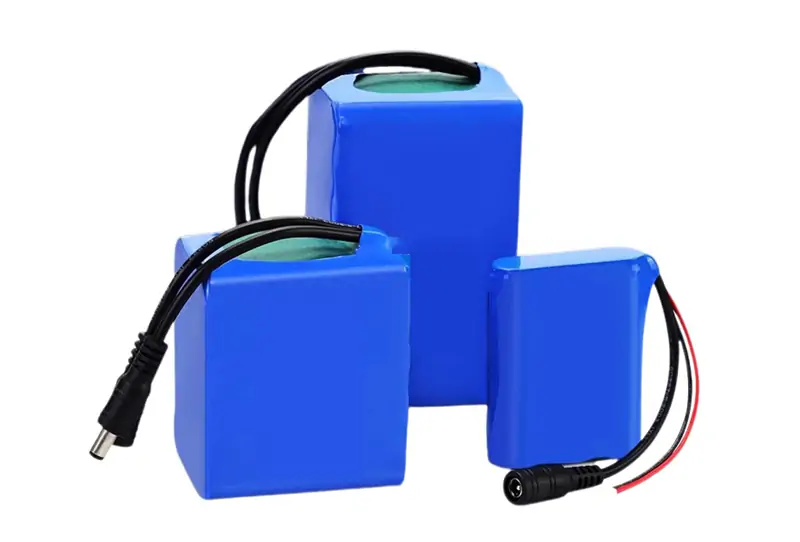
In addition to single battery cells, some solar lights use custom battery packs specifically designed for the product. Therefore, always check the original battery label and product specifications when replacing batteries.
3. Capacity
A higher-capacity battery stores more energy and can potentially provide longer lighting time. For example, increasing capacity from 600mAh to 2000mAh can significantly extend runtime.
However, a larger-capacity battery also requires more time to recharge. If the solar panel cannot fully charge the battery during the day, the battery may never reach its full potential. Higher-capacity batteries are also more expensive, which may increase costs without providing meaningful benefits.
For the best performance, choose a battery within the capacity range recommended by the manufacturer.
4. Consider the Operating Environment
If the solar light will be used in a cold or hot environment, please choose solar light batteries that are designed for extreme conditions. For example, high-temperature resistant batteries, low-temperature resistant batteries, and batteries with a wide temperature range.
5. Battery Quality and True Capacity
Batteries of the same type can vary significantly in price online. Some low-cost batteries claim unrealistically high capacities while delivering much lower actual performance.
At NBCELL, we are committed to providing batteries with true rated capacity and robust manufacturing quality to ensure safe, reliable performance. Whether you need individual battery cells or customized battery packs, we offer cost-effective solutions that combine dependable quality with excellent value.
How Long do Solar Batteries Last?
Like all rechargeable batteries, solar batteries gradually degrade with repeated charge-discharge cycles. Their actual lifespan depends on various factors, including battery chemistry, product quality, charging conditions, and how the solar light is used.
If a solar light exhibits shortened lighting time, significantly reduced brightness, prolonged charging time, battery leakage, or corrosion, it is recommended to replace the battery. After replacement, if the solar lighting system has no other malfunctions, the solar light should function normally.
Charging and Maintenance Tips
Proper maintenance can significantly improve battery performance and extend battery life. Here are some simple maintenance methods:
Keep the solar panels clean: Dust, leaves, and dirt reduce the amount of sunlight reaching the solar panels, thus limiting battery charging.
Avoid deep discharge: If possible, charge the batteries after prolonged storage before reusing the solar light.
Replace batteries in pairs: If the solar light uses multiple batteries, replacing all batteries at the same time helps maintain performance balance.
FAQ
Can I replace a NiMH battery with a lithium-ion battery?
Generally, no.
Although both are rechargeable batteries, they operate at different voltages and require different charging methods. Unless the solar light has been specifically designed to support lithium-ion batteries, replacing a NiMH battery with a lithium-ion battery is not recommended.
Why doesn't my solar light work after replacing the battery?
Installing a new battery does not always solve the problem.
Other possible causes include: a dirty or shaded solar panel, corroded battery contacts, a damaged charging circuit, moisture inside the fixture or A worn-out LED or electronic controller.
Inspecting the entire system can help identify the actual cause.
Can I use regular alkaline batteries in solar lights?
No.
Standard alkaline batteries are primary (non-rechargeable) batteries and should never be used in solar lights. Always use the rechargeable battery type specified by the manufacturer.
Conclusion
In summary, the best battery choice for solar lights depends on the product’s design and application, not just the battery’s chemistry. NiMH batteries are ideal for most solar garden lights, walkway lights, and decorative landscape lights because of their stable performance, excellent compatibility, and ease of replacement. Lithium-ion batteries offer higher energy density, enabling brighter wall lights, floodlights, and security lights. LiFePO₄ batteries are the preferred choice for commercial solar streetlights due to their long cycle life and superior safety. NiCd batteries were once widely used, but due to environmental concerns and lower performance, they have now been largely replaced by NiMH batteries.