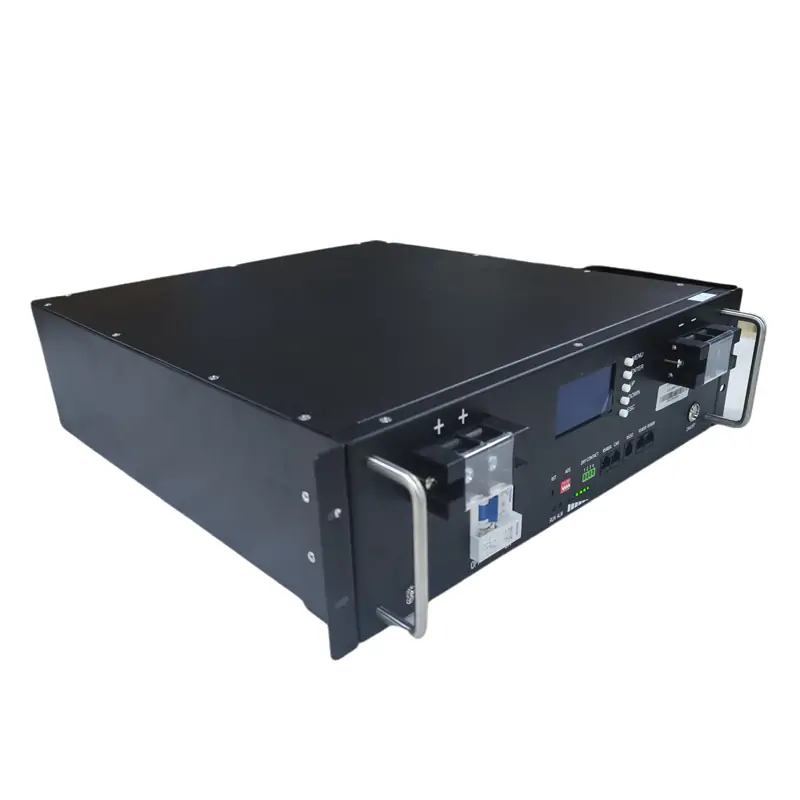
LFP and NMC battery represent the two dominant technological pathways currently prevailing in the field of lithium-ion batteries, finding widespread application in sectors such as electric vehicles and energy storage systems. Although both fall under the umbrella of lithium-ion battery technology, they exhibit significant differences in performance characteristics. Today, we will conduct a detailed comparison of LFP and NMC battery, examining them across various dimensions—including cycle life, safety, energy density, and cost etc..
LFP vs. NMC Battery
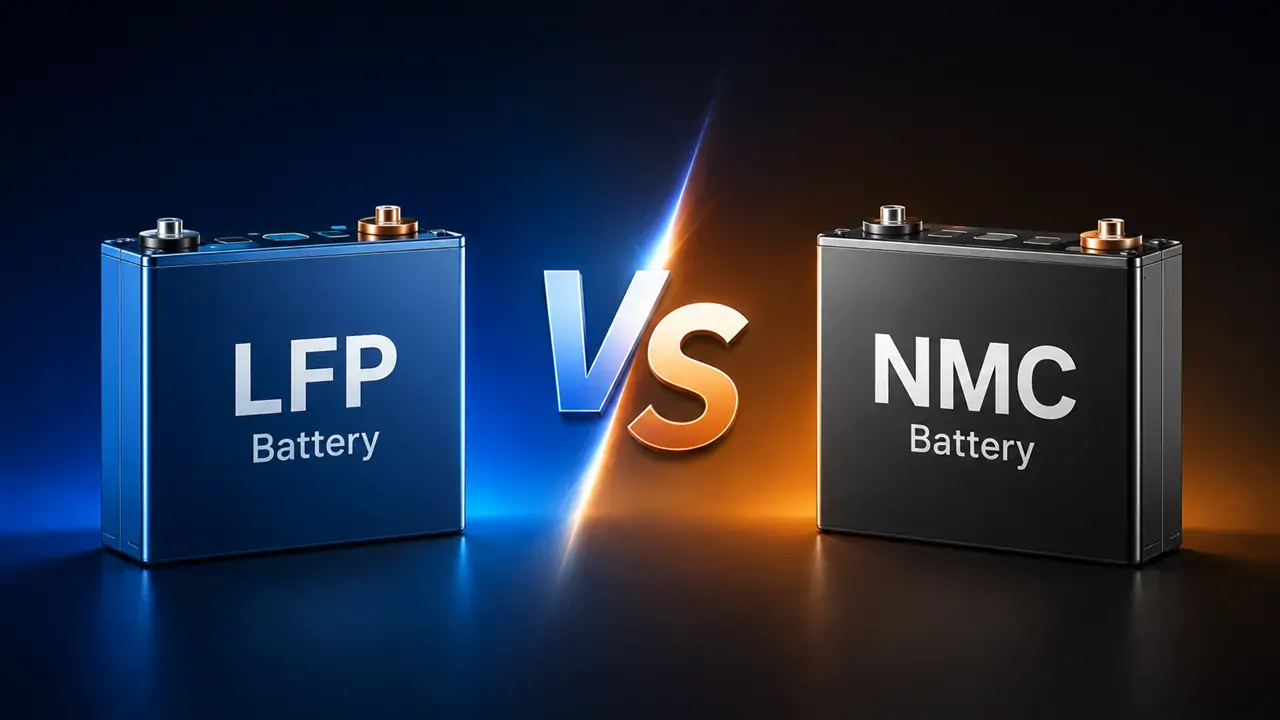
What are LFP and NMC Batteries?
The cathode material for LFP battery is lithium iron phosphate (LiFePO₄). This material utilizes abundant and low-cost iron and phosphorus elements, endowing LFP with significant advantages in terms of safety and longevity. The olivine crystal structure of LFP is exceptionally stable at the atomic level—the strong covalent bonds formed between phosphorus and oxygen ensure that the crystal lattice remains intact even under high temperatures or extreme states of charge, making it highly resistant to structural collapse.
In contrast, the cathode in NMC (Nickel-Manganese-Cobalt) battery consists of a layered oxide. Common compositions include NMC 532 (50% nickel, 30% manganese, 20% cobalt), NMC 622, and NMC 811 (80% nickel). Increasing the nickel content significantly boosts energy density, albeit at the cost of reduced material stability. NMC battery has long been the preferred choice for high-end electric vehicles, as maximizing driving range is the primary objective for these models.
Cycle Life
Cycle life refers to the number of complete charge-discharge cycles a battery can withstand before its capacity degrades to a specific threshold (typically 80% of its original capacity).
The cycle life of LFP battery is significantly longer than that of NMC battery. Research data indicates that in stationary energy storage applications (such as home solar systems), LFP battery can typically complete between 4,000 and 10,000 cycles before their capacity drops to 80%; in contrast, NMC battery have a shorter cycle life—approximately 2,000 to 5,000 cycles—under equivalent conditions. In more demanding applications, this disparity between the two may widen even further.
This implies that if a charge-discharge cycle is performed daily, an LFP home energy storage system could operate for 10 to 15 years before requiring replacement, whereas an NMC battery subjected to the same usage intensity might need to be replaced after just 5 to 8 years. For applications requiring frequent charging and discharging, the extended lifespan of LFP battery technology translates directly into a lower total cost of ownership over the system’s entire lifecycle.
Safety
LFP battery possess superior thermal stability. Their olivine crystal structure remains stable within a temperature range extending from approximately 270°C to 400°C. Crucially, LFP battery does not release oxygen during thermal events. The release of oxygen is often a primary catalyst that exacerbates catastrophic fires in lithium-ion batteries. Industry research indicates that in high-intensity application scenarios—such as multi-shift warehouse operations—the probability of thermal runaway incidents occurring in LFP battery is approximately 80% lower than that of NMC battery.
In contrast, the thermal runaway trigger temperature for NMC battery is approximately 200°C, which is significantly lower than that of LFP battery. The cobalt content within NMC cathodes increases the likelihood of overheating and combustion, particularly in high-temperature environments. NMC variants with high nickel content (such as NMC 811) exhibit greater chemical reactivity, thereby presenting a higher potential for triggering thermal runaway. In practical applications, NMC battery often require the integration of more sophisticated battery management systems.

Energy Density
Energy density (measured in Wh/kg) determines how much energy a battery can store relative to its weight. In this regard, NMC battery maintain a distinct advantage.
The energy density of NMC battery typically falls within the range of 150 to 250 Wh/kg, while some newly introduced NMC battery cells have already reached 250 to 300 Wh/kg. This high energy density makes NMC battery particularly well-suited for applications with strict space and weight constraints.
LFP battery, by contrast, possess a relatively lower energy density, typically ranging from 90 to 160 Wh/kg. Although recent technological advancements have boosted the energy density of certain LFP battery cells to between 160 and 200 Wh/kg, this remains a significant shortcoming when compared to NMC battery.
However, innovative battery pack structural designs are helping to narrow this gap. For instance, in its structural LFP battery packs, Tesla utilizes 22% fewer cooling lines than in its NMC versions—a design choice that capitalizes on the inherently superior thermal stability of LFP chemistry.
Aging and Degradation
For LFP battery, calendar aging is primarily influenced by the State of Charge (SOC) and temperature. Higher SOC levels and elevated ambient temperatures accelerate capacity degradation; the primary mechanism behind this is the continuous growth of the SEI (Solid Electrolyte Interphase) film on the anode. The SEI is a protective layer formed during the initial cycling of the battery; however, it gradually thickens over time, a process that continuously consumes the active lithium available for electrochemical reactions within the cell. The good news is that the olivine structure of LFP exhibits minimal volume expansion—less than 5%—during charge-discharge cycles. This characteristic effectively prevents the formation of structural microcracks, a problem that plagues other battery chemistries. This structural integrity endows LFP battery with an exceptionally long cycle life.
The degradation pathways for NMC battery is considerably more complex. In addition to SEI film growth, high-nickel NMC cathodes are susceptible to cation mixing, a phenomenon that progressively diminishes the available capacity. The layered oxide structure of NMC is inherently less stable than the olivine structure of LFP; consequently, NMC batteries are more prone to capacity degradation under both calendar aging and cycling aging conditions. As a result, LFP battery is better able to retain their original capacity over extended periods, whereas signs of degradation become significantly more pronounced in NMC battery.
Cost
At the battery cell level, the cost per kilowatt-hour (kWh) for LFP battery is typically 20% to 30% lower than that of NMC battery. This price disparity stems primarily from differences in raw material costs: LFP battery utilizes abundant iron and phosphorus, whereas NMC battery requires cobalt and nickel—two metals characterized by volatile pricing and supply chain constraints.
Beyond the initial acquisition cost, LFP battery’s longer cycle life translates into a lower cost per cycle. For applications involving daily cycling, this total lifecycle cost advantage can be substantial.
Low-Temperature Performance
Both types of batteries experience a decline in performance in low-temperature environments, though to a comparable degree. However, in practical electric vehicle applications, it is generally perceived that LFP battery exhibit relatively poorer low-temperature performance; specifically, the reduction in driving range is often more pronounced than that of NMC battery.
Furthermore, the voltage curve of LFP battery remains remarkably flat within the 25% to 85% State of Charge (SOC) range. This characteristic poses a challenge for Battery Management Systems (BMS) attempting to accurately estimate the remaining charge—an issue that becomes even more acute in low-temperature environments. Currently, manufacturers address this challenge by offering optional heating modules to ensure that LFP battery maintain efficient operational performance under cold conditions.
Environment
The relatively simple chemical composition of LFP battery helps to reduce the complexity of the recycling process.
Furthermore, the carbon emissions associated with LFP cathode materials are lower than those of NMC cathode materials; this reflects the fact that iron and phosphorus have a smaller environmental impact during the mining phase compared to nickel and cobalt, and also indicates that the production and processing of NMC materials require greater energy consumption.
Which Battery is Right for You?
If safety is your primary consideration, and you require a long cycle life and lower costs—while also having sufficient space to accommodate a larger battery pack—then you should prioritize LFP battery.
Conversely, if your installation space is limited, cycle life is not a critical requirement, and energy density and lightweight design are your top priorities, then you should prioritize NMC battery.
Therefore, the choice between LFP battery and NMC battery ultimately depends on your core requirements.
Summary
Both battery technologies continue to advance. Through sophisticated module design and novel material formulations, the energy density of LFP battery is steadily rising; meanwhile, researchers developing NMC battery technology are striving to develop variants with higher nickel content and enhance safety performance.
However, market data reveals that LFP battery’s share of installed capacity in the global EV battery market has surged from approximately 10% in 2020 to nearly 40% in 2024 (exceeding 60% in the Chinese market alone), with major automakers now adopting LFP battery in their entry-level or standard-range models. In the realm of stationary energy storage, LFP battery has established an even more dominant position. Thanks to its comprehensive advantages in safety, longevity, and value, LFP battery is increasingly emerging as the more compelling choice.